
Cách viết Writing Task 1 chi tiết
Introduction (mở bài)
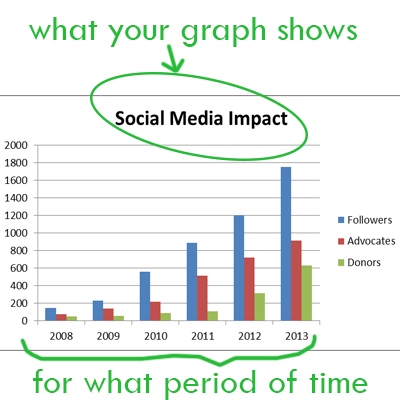
Các bạn nên bắt đầu viết task 1 (viết đoạn mở bài) bằng cách nêu lại những thông tin đã được đưa ra trong phần đề bài. Chỉ cần viết 1-2 câu để chỉ ra biểu đồ này đang trình bày về vấn đề gì và mốc thời gian nào (nếu có) là đủ.
Để làm được điều này (viết đoạn mở bài) thì paraphrase nội dung từ đề bài là cách tốt nhất mà bạn nên áp dụng.

Ví dụ:
Question:
The graphs below give information about computer ownership as a percentage of the population between 2002 and 2010, and by level of education for the years 2002 and 2010.
Introduction:
The bar charts show data about computer ownership, with a further classification by level of education, from 2002 to 2010.
Một số lưu ý khi paraphrase đề bài:
Đa dạng hóa các cụm từ giới thiệu
– the graph/chart/table/diagram
– gives information about/on
– provides information about/on
– shows
– illustrates
– represents
– depicts
– gives reason why (đưa ra lý do nếu biểu đồ đưa ra lý do cho vấn đề nào đó)
– explains why ( chỉ dùng nêu biểu đồ có đưa ra giải thích)
– compares (chỉ khi có một vài nội dung được so sánh)
Chú ý với từ “compare”, các bạn có thể nói:
- compares smth in terms of smth
the charts compare two cities in terms of the number of employed people.
- compares smth in year1 and year2
the graph compares the population in 2000 and 2013.
Cấu trúc để viết Introduction hay
CHỦ NGỮ + TÊN HÌNH:
The/ the given / the supplied / the presented / the shown / the provided
+
diagram / table / figure / illustration / graph / chart / flow chart / picture/ presentation/ pie chart / bar graph/ column graph / line graph / table data/ data / information / pictorial/ process diagram/ map/ pie chart and table/ bar graph and pie chart
ĐỘNG TỪ
shows / represents / depicts / enumerates / illustrates / presents/ gives / provides / delineates/ outlines/ describes / delineates/ expresses/ denotes/ compares/ shows contrast / indicates / figures / gives data on / gives information on/ presents information about/ shows data about/ demonstrates/ sketch out/ summarises…
MÔ TẢ (WHAT-WHERE-WHEN)
the comparison of…
the differences…
the changes…
the number of…
information on…
data on…
the proportion of…
the amount of…
information on…
data about…
comparative data…
the trend of…
the percentages of…
the ratio of…
how the…
VÍ DỤ:
1. The diagram shows employment rates among adults in four European countries from 1925 to 1985.
2. The given pie charts represent the proportion of male and female employees in 6 broad categories, dividing into manual and non-manual occupations in Australia, between 2010 and 2015.
3. The chart gives information about consumer expenditures on six products in four countries namely Germany, Italy, Britain and France.
4. The supplied bar graph compares the number of male and female graduates in three developing countries while the table data presents the overall literacy rate in these countries.
5. The bar graph and the table data depict the water consumption in different sectors in five regions.
6. The bar graph enumerates the money spent on different research projects while the column graph demonstrates the fund sources over a decade, commencing from 1981.
7. The line graph delineates the proportion of male and female employees in three different sectors in Australia between 2010 and 2015.
Overview (mô tả chung)
Bạn sẽ không cần viết kết bài đối với Writing Task 1, thay vào đó, bạn phải viết “overview”. Nhưng tại sao chúng ta lại không phải viết kết bài? Sự khác nhau giữa kết bài “conclusion” và mô tả chung “overview” là gì?
Đầu tiên, kết bài được hiểu là nhận xét cuối cùng, mang tính ý kiến quyết định. Kết bài là phần không thể thiếu với Task 2, tuy nhiên đối với Task 1, chúng ta phải viết bài mô tả, vậy nên ý kiến phân tích của cá nhân là không cần thiết. Thay vì viết kết bài, bạn cần phải viết “overview”, mô tả lại các ý chính một cách tóm tắt. Overview khi đó được hiểu là sự tóm tắt ngắn gọn thông số/ thông tin trong bảng và biểu đồ.
Thứ hai, kết bài luôn đứng ở cuối bài viết, trong khi đó overview có thể đứng ở đầu hoặc cuối bài. Lời khuyên đó là overview nên được viết ngay sau câu mở đầu, sẽ giúp cho bài mô tả logic hơn. Giám khảo gọi phần này là ‘general overview’ hoặc ‘overall trend’. Đoạn văn tóm tắt phải viết ngay sau mở bài, tuy nhiên viết ở cuôi bài cũng vẫn được chấp nhận. Một cách để tóm tắt bảng biểu đó là quan sát thay đổi 1 cách bao quát.
Lưu ý: Khi có quá nhiều thông tin (như biểu đồ bên dưới), rất khó để tìm ra được ý chính cho biểu đồ. Hãy quan sát kỹ, bạn cần phải tìm sự thay đổi từ đầu đến cuối giai đoạn. Tuy nhiên, ví dụ dưới đây biểu đồ này không có xu hướng chính bởi số liệu dao động. Vớ những dạni biểu đồ như thế này, bạn nên nói về con số cao nhất và thấp nhất.
The table below shows the figures for imprisonment in thousands in five countries between 1930 and 1980
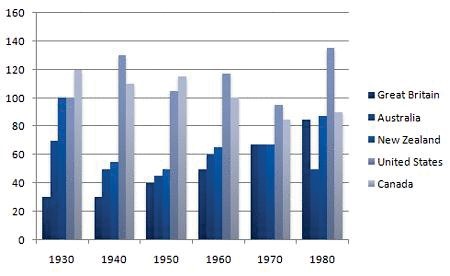
Câu mô tả chung: While the figures for imprisonment fluctuated over the period shown, it is clear that the United States had the highest number of prisoners overall. Great Britain, on the other hand, had the lowest number of prisoners for the majority of the period.
Một số từ vựng để viết W1, đoạn nhận xét chung.
1. In general, …
2. In common, …
3. Generally speaking, …
4. Overall, …
5. It is obvious, …
6. As it is observed, …
7. As a general trend …
8. As can be seen, …
9. As an overall trend/ As overall trend, …
10. As it is presented, …
11. It can be clearly seen that, …
12. At the first glance, …
13. It is clear,
14. At the onset, …
15. It is clear that, …
16. A glance at the graph(s) reveals that, …
EXAMPLE:
1. In general, the employment opportunities increased till 1970 and then declined throughout the next decade.
2. As it is observed, the figures for imprisonment in the five mentioned countries show no overall pattern, rather shows the considerable fluctuations from country to country.
3. Generally speaking, citizens in the USA had a far better life standard than that of the remaining countries.
4. As can be seen, the highest number of passengers used the London Underground station at 8:00 in the morning and at 6:00 in the evening.
5. As an overall trend, the number of crimes reported increased fairly rapidly until the mid-seventies, remained constant for five years and finally, dropped to 20 cases a week after 1982.
6. At a first glance, it is clear that more percentages of native university pupils violated regulations and rules than the foreign students did during this period.
7. At the onset, it is clear that drinking in public and drink-driving were the most common reasons for US citizens to be arrested in 2014.
8. Overall, the leisure hours enjoyed by males, regardless of their employment status, was much higher than that of women.
Nên viết Overview trước hay sau?
Overview – Đánh giá tổng quan là một phần cực kỳ quan trọng trong Writing Task 1. Ở band điểm từ 6 đến 7, phần này trong bài viết được ghi rõ trong Band Descriptors – tiêu chí Task Achievement.
Tuy nhiên, trên thực tế, rất nhiều học sinh vẫn thường thắc mắc là nên viết Overview ở đầu hay cuối bài viết?
Về bản chất, Band Descriptors chỉ yêu cầu bắt buộc phải có Overview nhưng không nói rõ là trình bày như thế nào, do vậy, về logic, có 2 vị trí phù hợp cho phần Overview. Tuy nhiên, cách viết nào cũng có ưu và nhược điểm riêng.
Cách 1: Overview ở đầu bài viết, ngay sau câu Introduction, nên xuống dòng, bỏ cách một dòng để tách riêng phần Overview ra khỏi Introduction.
– Ưu điểm: tạo thành kết cấu bài viết Diễn dịch. Tất cả các thông tin cơ bản nhất xuất hiện ở phần Overview ngay từ đầu, các chi tiết phía sau đóng vai trò chứng minh cho phần nhận xét khái quát này.
– Nhược điểm: nhận xét Overview ngay từ phần đầu bài là việc không dễ, nhiều thí sinh chưa đủ khả năng để đưa ra một câu nhận xét đủ khái quát và hợp lý, từ đó các câu Overview thường chỉ được viết khá sơ sài.
Cách 2: Overview ở cuối bài viết, sau khi viết xong phần thân bài, cần xuống dòng tách riêng đoạn Overview ra khỏi phần Body
– Ưu điểm: tạo thành kết cấu bài viết Tổng phân hợp, Introduction, Body, và Overview ngang bằng với đoạn kết bài. Tất cả các thông tin chi tiết đã được trình bày trong Body, phần Overview có vai trò tổng hợp và kết luận lại bài viết. Sau khi thí sinh đã trình bày rõ các thông tin chi tiết trong phần Body, phần Overview viết sau thường sẽ có đủ tính khái quát và và sâu sắc hơn.
– Nhược điểm: Đây là cách viết khá “mạo hiểm”. Trên thực tế, rất nhiều thí sinh sẽ viết Task 2 trước Task 1. Nhiều trường hợp đã xảy ra trong phòng thi như sau: Thí sinh viết Task 2 trước nhưng quá thời gian lên 45 phút. Phần Task 1 chỉ được viết trong 15 phút cuối. Khi đó, có thể xảy ra tình huống hết thời gian viết bài mà thí sinh chưa kịp viết xong phần Overview cuối cùng.
Hiện tại, các bài viết điểm cao do giám khảo đã chấm với các Band điểm từ 7 trở lên đều có cả 2 cách viết Overview ở đầu và cuối bài viết. Những ưu và nhược điểm của cả 2 cách viết trên đều đã được trình bày rõ ràng. Chúc các bạn sẽ chọn được cách viết phù hợp với phong cách suy nghĩ của mình và rèn luyện thật nhuần nhuyễn.

Thân bài (Detail 1 và Detail 2)
Với thời lượng 20 phút, bạn nên viết 2 đoạn cho phần thân bài. Chúng ta sẽ sử dụng phương pháp nhóm thông tin có nghĩa là tìm ra điểm tương đồng và khác biệt của các số liệu trong bảng biểu và nhóm chúng vào với nhau.
Thông thường các bảng biểu sẽ cho chúng ta 2 nhóm tương đồng, việc của chúng ta là tìm ra sự khác biệt và điểm tương đồng của các số liệu rồi nhóm chúng làm 2 nhóm và viết cho mỗi một nhóm một đoạn Detail paragraph, mỗi nhóm khoảng 3 – câu nhé!
VOCABULARY TO START THE REPORT BODY:
EXAMPLE
Các từ vựng và ví dụ để tả về trend – xu hướng
TẢ SỰ TĂNG LÊN – INCREASE
VERB: rise / increase / go up / uplift / rocket(ed) / climb / upsurge / soar/ shot up/ improve/ jump/ leap/ move upward/ skyrocket/ soar/ surge.
NOUN: a rise / an increase / an upward trend / a growth / a leap / a jump / an improvement/ a climb.
TẢ SỰ GIẢM XUỐNG – DECREASE
VERB: fall / decrease / decline / plummet / plunge / drop / reduce / collapse / deterioriate/ dip / dive / go down / take a nosedive / slum / slide / go into free-fall.
NOUN: a fall / a decrease / a reduction / a downward trends /a downward tendency / a decline/ a drop / a slide / a collapse / a downfall.
TẢ SỰ BÌNH ỔN – STEADINESS
VERB: Stay unchanged / level out / remain constant / remain steady / plateau / remain the same / remain stable / remain static
NOUN: a steadiness/ a plateau / a stability/ a static
Các từ vựng tả mức độ thay đổi
Thay đổi lớn, nhanh, rõ rệt – Rapid change
ADVERB: dramatically / rapidly / sharply / quickly / hurriedly / speedily / swiftly / significantly/ considerably / substantioally / noticably.
ADJECTIVE: dramatic / rapid / sharp / quick / hurried / speedy / swift / significant / considerable / substantial / noticable.
Thay đổi ở mức trung bình – Moderate change
ADVERB: moderately / gradually / progressively / sequentially.
ADJECTIVE: moderate / gradual / progressive / sequential.
Thay đổi đều, thay đổi ổn định – Steady change
ADVERB: steadily/ ceaselessly.
ADJECTIVE: steady/ ceaseless.
Thay đổi nhỏ – Slight change
ADVERB: slightly / slowly / mildly / tediously.
ADJECTIVE: slight / slow / mild / tedious.
VÍ DỤ – EXAMPLES
1. The economic inflation of the country increased sharply by 20% in 2008.
2. There was a sharp drop in industrial production in the year 2009.
3. The demand for new houses dramatically increased in 2002.
4. The population of the country dramatically increased in the last decade.
5. The price of oil moderately increased during the last quarter but as a consequence, the price of daily necessities rapidly went up.
Các từ vựng để tả trend – xu hướng
Các ví dụ.
TẢ SỰ TĂNG DẦN – Gradual increase
NOUN: an upward trend / an upward tendency / a ceiling trend
TẢ SỰ GIẢM DẦN – Gradual decrease
NOUN: a downward trend / a downward tendency / a descending trend
VÍ DỤ – EXAMPLES:
1. The overall sale of the company increased by 20% at the end of the year.
2. The expenditure of the office remained constant for the last 6 months but the profit rose by almost 25%.
3. There was a 15% drop in the ratio of student enrollment at this University.
4. The population of the country remained almost the same as it was 2 years ago.
5. The population of these two cities increase significantly in the last two decades and it is expected that it will remain stable during the next 5 years.
1. Bài mẫu phân tích
The table below gives information on consumer spending on different items in five different countries in 2002. Write a report for a university lecturer describing the information shown below. Make comparisons where relevant.
Percentage of national consumer expenditure by category – 2002
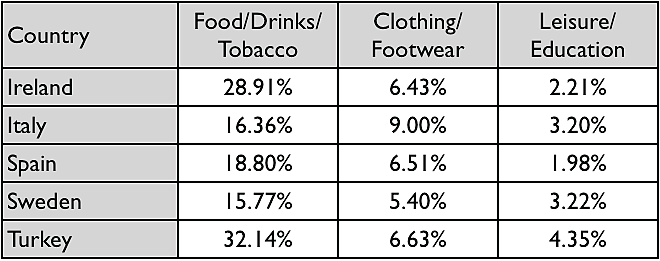
Introduction: The table shows percentages of consumer expenditure for three categories of products and services in five countries in 2002.
Overview: It is clear that the largest proportion of consumer spending in each country went on food, drinks and tobacco. On the other hand, the leisure/education category has the lowest percentages in the table.
Detail 1: Out of the five countries, consumer spending on food, drinks and tobacco was noticeably higher in Turkey, at 32.14%, and Ireland, at nearly 29%. The proportion of spending on leisure and education was also highest in Turkey, at 4.35%, while expenditure on clothing and footwear was significantly higher in Italy, at 9%, than in any of the other countries.
Detail 2: It can be seen that Sweden had the lowest percentages of national consumer expenditure for food/drinks/tobacco and for clothing/footwear, at nearly 16% and just over 5% respectively. Spain had slightly higher figures for these categories, but the lowest figure for leisure/education, at almost 2%. (155 Words)
Nhận xét:
Sau khi viết Mở bài (introduction) và mô tả chung (overview/summary), chúng ta sẽ đi tới đoạn mô tả chi tiết các con số trong bảng biểu.
2. Từ vựng mô tả xu hướng, sự thay đổi
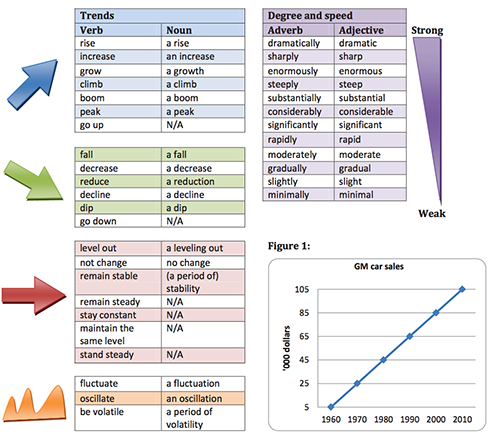
Các câu mô tả cho Figure 1:
➤ GM car sales increased significantly from $5,000 to $105,000 between 1960 and
➤ There was a significant increase of $100,000 in GM car sales, from $5,000 to $105,000, between 1960 and
➤ GM car sales saw a significant growth in GM car sales, from $5,000 to $105,000, between 1960 and 2010.
➤ GM car sales registered a significant rise between 1960 and
➤ GM car sales reached a peak at $105,000 in
➤ GM car sales had an enormous climb of $100,000 between 1960 and…
3. Dùng giới từ chính xác
Khi mô tả số liệu và các đặc điểm, các giới từ như “to, by, with và at” có vai trò rất quan trọng trong câu. Dưới đây là một vài ví dụ bạn có thể tham khảo nhé:
– Dùng giới từ “to” khi mô tả sự thay đổi đến mức nào đó
In 2008, the rate of unemployment rose to 10%.
– Dùng giới từ “by” khi mô tả sự thay đổi một khoảng nào đó
In 2009, the rate of unemployment fell by 2% (from 10% to 8%).
– Dùng giời từ “with” để nói về phần trăm, số lượng chiếm được
He won the election with 52% of the vote.
– Dùng giới từ “at” để thêm con số vào cuối câu
Unemployment reached its highest level in 2008, at 10%.
4. Cách mô tả số liệu, phần trăm và phân số
Trong một vài bảng biểu, đặc biệt là bảng (table), có những con số đặc biệt dướ dạng phân số như 1/3 hoặc 50%. Quan sát bảng dưới đây miêu tả số liệu trong năm 1990-1995:
Bạn có thể mô tả bảng sau bằng con số, phân số hoặc phần trăm:
| 1990 | 1995 |
| 1,200 | 1,800 |
– The number went up by 600 from 1,200 to 1,800. (con số)
– The number went up by one third from 1,200 to 1,800. (phân số)
– The number went up by 50% from 1,200 to 1,800. (phần trăm)
Lưu ý:
- Cách chúng ta mô tả số liệu
- ½ = a half (một nửa)
- ¼ = a quarter (một phần tư)
NHƯNG:
- 1/3 = one third
- 2/5 = two fifth
Cách mô tả số lượng
Cùng xem các ví dụ dưới đây và các công thức mẫu một cách kĩ càng. Đây là những mẫu bạn có thể áp dụng khi mô tả các con số khác nha trong bài task 1.
The number of + Plural Countable Noun + Singular Verb Form
- The number of people out of work fell by 99,000 to 2.39 million in the three months to October.
The amount of + Singular Uncountable Noun + Singular Verb Form
- The amount of rainfall doubles between May and June.
The proportion of + Countable or Uncountable Nouns + Singular Verb Form
- The proportion of spending on furniture and equipment reached its peak in 2001, at 23%.
The percentage of + Countable or Uncountable Nouns + Singular Verb Form
- The percentage of people using their phones to access the Internet jumped to 41% in
The figures for Countable or Uncountable Nouns + Plural Verb Form
- The figures for imprisonment fluctuated sharply over the period shown.
5. Cách so sánh đơn giản
Bạn có thể dùng “compared to”, “compared with”, “in comparison to” và “in comparison with” như nhau. Ví dụ:
- Prices in the UK are high compared to / with / in comparison with (prices in) Canada and
- Compared to / with / in comparison with (prices in) Canada and Australia, prices in the UK are
Khi viết về con số hoặc sự thay đổi, các từ “while” hoặc “whereas” có thể dùng được trong rất nhiều hoàn cảnh:
- There are 5 million smokers in the UK, while / whereas only 2 million Canadians and 1 million Australians
- Between 1990 and 2000, the number of smokers in the UK decreased dramatically, while / whereas the figures for Canada and Australia remained the
6. Cách đưa ra giải thích
Khi đưa thêm thông tin giải thích, bạn cần giới hạn số lượng từ để đảm bảo rằng bài viết có thông tin chất lượng nhưng không vượt quá giới hạn từ. Cùng xem xét ví dụ sau đây nhé:
– Both cities experienced a rise in the number of tourists coming in through their airports, which reached a common level of 255,000 in
Rút gọn: Both cities experienced a rise in the number of tourists coming in through their airports, reaching a common level of 255,000 in July.
– Gold bar prices experienced a spectacular rise in November, which climbed to a new peak of $625.
Rút gọn: Gold bar prices experienced a spectacular rise in November, climbing to a new peak of $625.
– In the first half of 2009, the attendance at the museum went into free fall, which nose-dived to approximately 300,000
Rút gọn: In the first half of 2009, the attendance at the museum went into free fall, nose-diving to approximately 300,000 visitors.
– Females also spend less time socializing and much less time than men on sport, which allows them more time for
Rút gọn: Females also spend less time socializing and much less time than men on sport, allowing them more time for studying.
Xem thêm các bài viết hay tại Ngoại ngữ Phương Lan
